
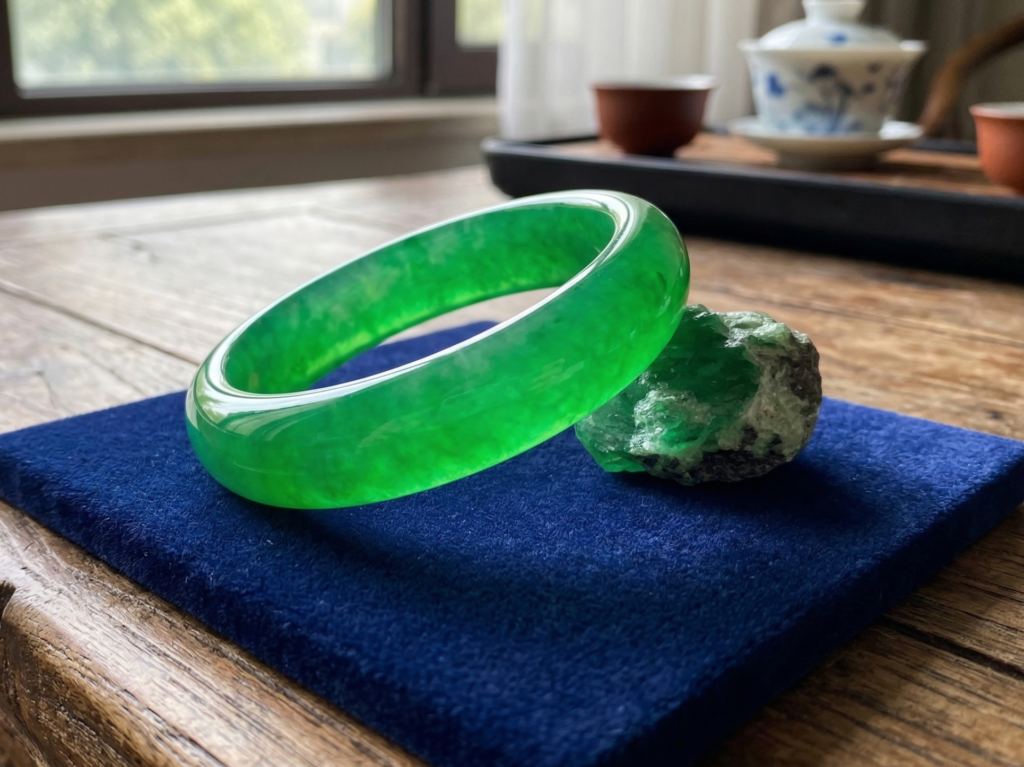
Imperial Jade is best known for its rich, vibrant green color, often described as the most beautiful and valuable shade in the jade world. But not all green jade is Imperial Jade—its color must meet very specific standards to qualify.
In this guide, you’ll learn exactly what color Imperial Jade is, what makes it unique, and how it compares to other jade colors.
What Color Is Imperial Jade?
Imperial Jade is a pure, vivid emerald-green jadeite with high translucency and even color distribution.
The ideal Imperial Jade color is often described as:
- Bright but not overly dark
- Rich and saturated
- Slightly translucent, with a glowing effect
- Even across the entire stone
This specific shade is sometimes referred to in the trade as “emerald green”, but it is not identical to emerald gemstones—it has a softer, more luminous appearance.
What Creates the Color of Imperial Jade?
The green color of Imperial Jade comes from trace amounts of chromium within the jadeite mineral.
Key points:
- Chromium produces the intense green tone
- The concentration must be balanced (too much can darken the stone)
- Even distribution of chromium leads to uniform color
If the color is uneven or patchy, the value drops significantly.
Key Characteristics of Ideal Imperial Jade Color
To be classified as top-grade Imperial Jade, the color must meet several strict criteria:
1. Pure Green Tone
- No yellow, brown, or gray undertones
- No bluish tint
2. High Saturation
- The color should be strong and vivid
- Not pale or washed out
3. Even Distribution
- Color should be consistent across the stone
- No blotches or streaks
4. Slight Translucency
- Light should pass through the jade
- Creates a glowing, “alive” effect
Imperial Jade vs Other Green Jade Colors
Not all green jade is equal. Here’s how Imperial Jade compares:
Imperial Green
- Bright, vivid, pure green
- Highest value
Apple Green Jade
- Lighter, more yellowish green
- Less valuable
Spinach Green Jade
- Darker, more opaque green
- Lower translucency
Moss-in-Snow Jade
- White jade with green patches
- Decorative but not top grade
Only Imperial Green meets the highest standard.
Does Darker Green Mean Better Jade?
Not necessarily.
Many people assume darker jade is more valuable, but in reality:
- Too dark = loses brightness and translucency
- Too light = lacks richness
The most valuable Imperial Jade sits in a perfect balance between brightness and depth.
How Lighting Affects Jade Color
Jade color can look different depending on lighting conditions:
- Natural daylight: shows true color best
- Indoor lighting: may make jade appear dull
- Backlighting: reveals translucency
High-quality Imperial Jade maintains its beauty under different lighting, which is a sign of superior quality.
Why Color Is the Most Important Factor
Among all jade quality factors—color, translucency, texture, and clarity—color has the greatest impact on value.
A stone with:
- Perfect color but average translucency
can still be very valuable
But a stone with:
- Poor color (even if very clear)
will not reach high prices
This is why Imperial Jade’s unique green color makes it the most prized.
Real vs Fake Color
Because color determines value, it is also the most commonly manipulated feature.
Signs of Natural Color
- Slight variations within a natural range
- Soft, glowing appearance
Signs of Dyed Jade
- Color too bright or artificial
- Concentrated in cracks or edges
- Uneven or blotchy patterns
Always verify authenticity when buying high-value jade.
Final Thoughts
Imperial Jade is defined by its vivid, pure emerald-green color, combined with translucency and even distribution. This rare and balanced hue is what sets it apart from all other jade types.
Understanding the color of Imperial Jade is essential whether you’re:
- Buying jade jewelry
- Collecting gemstones
- Learning about jade quality
In the world of jade, color is everything—and Imperial Jade represents the absolute best of it.